Project Overview
OneTwoDo is a local services marketplace where users post and browse listings for everyday services — cleaning, repairs, painting, plumbing, moving, beauty, and more — and connect directly with providers nearby. Our team built the product end to end: product design, the Flutter client, and everything the app runs on.
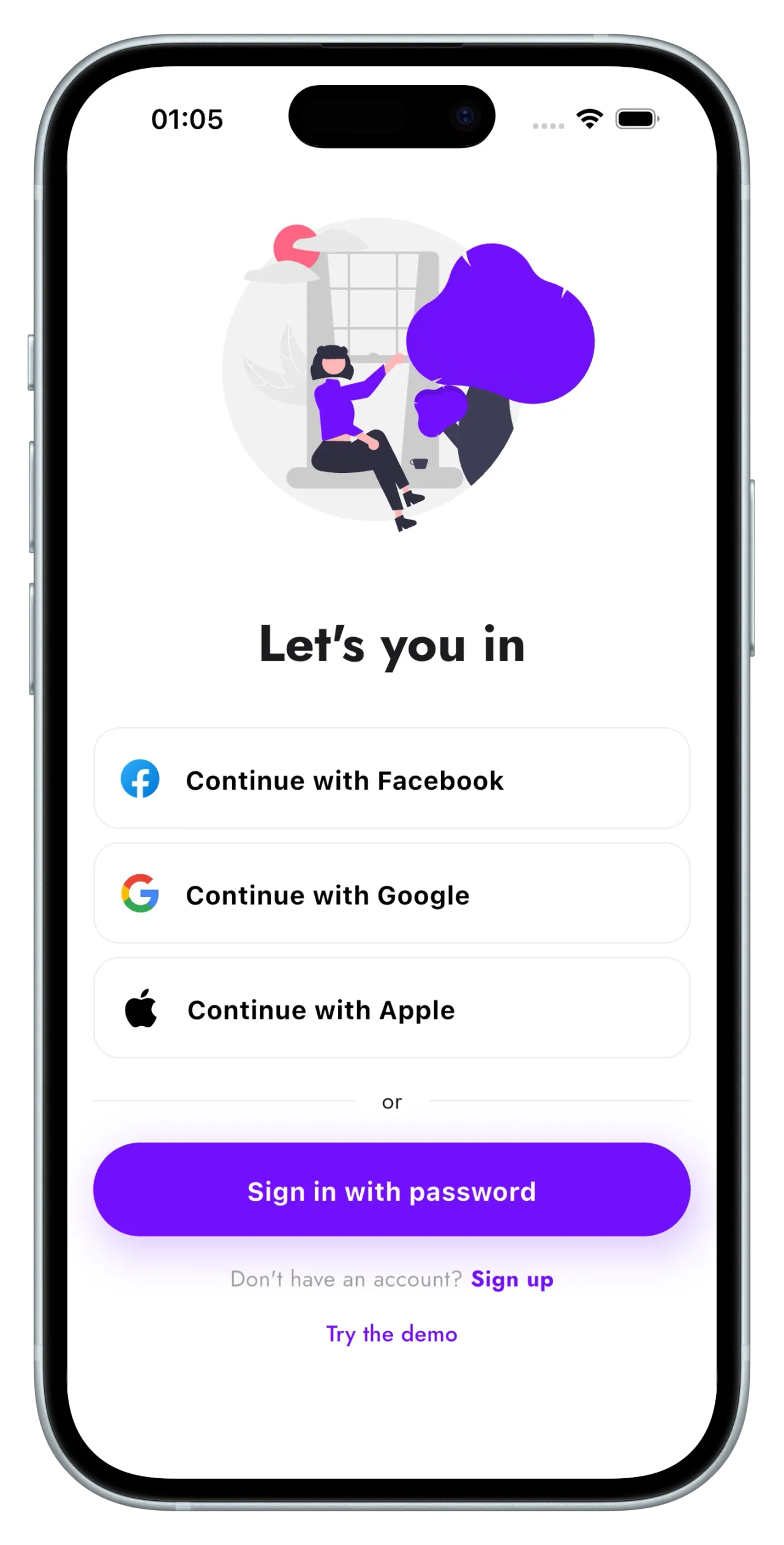
Sign-in screen
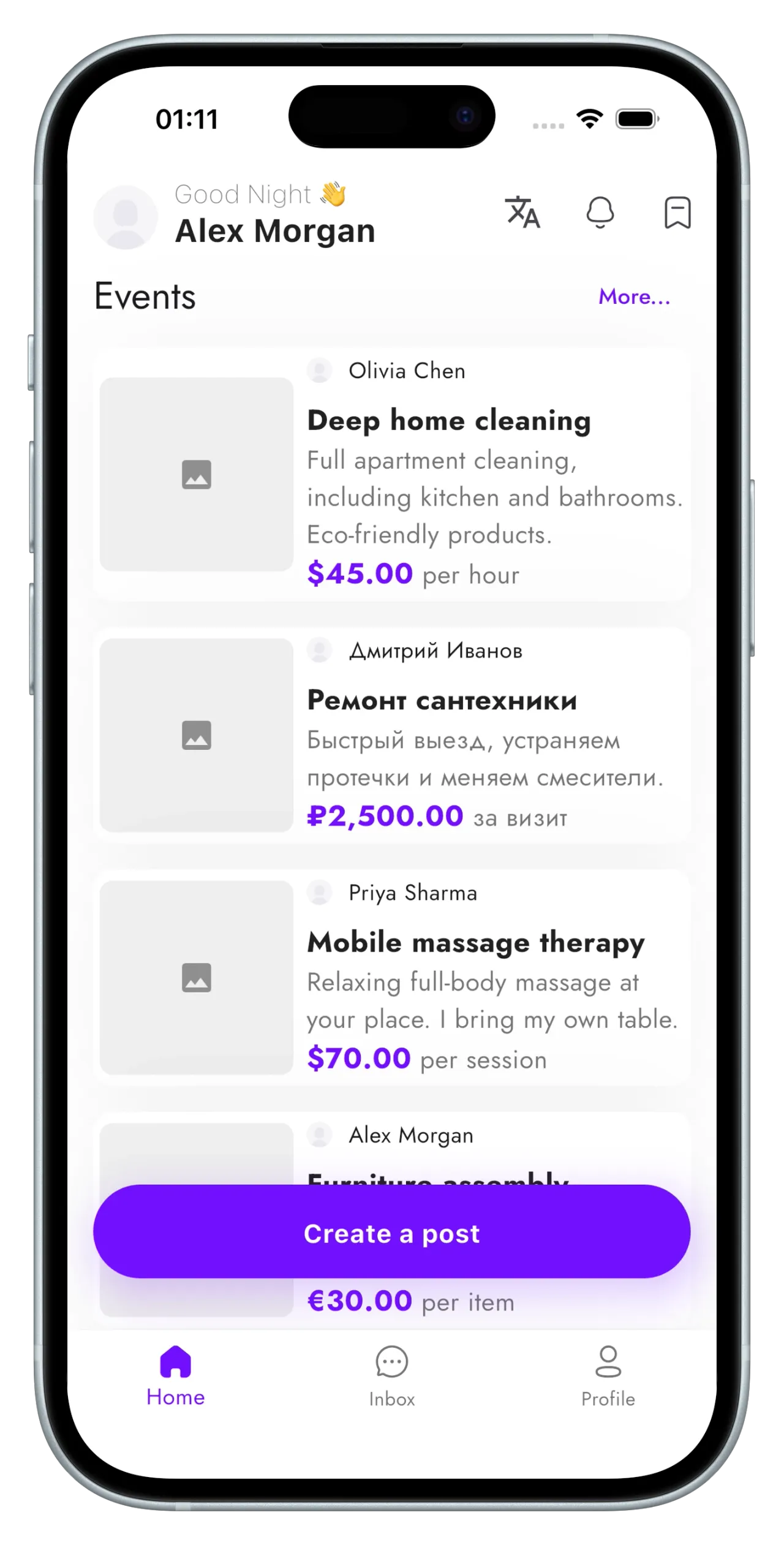
Listings feed
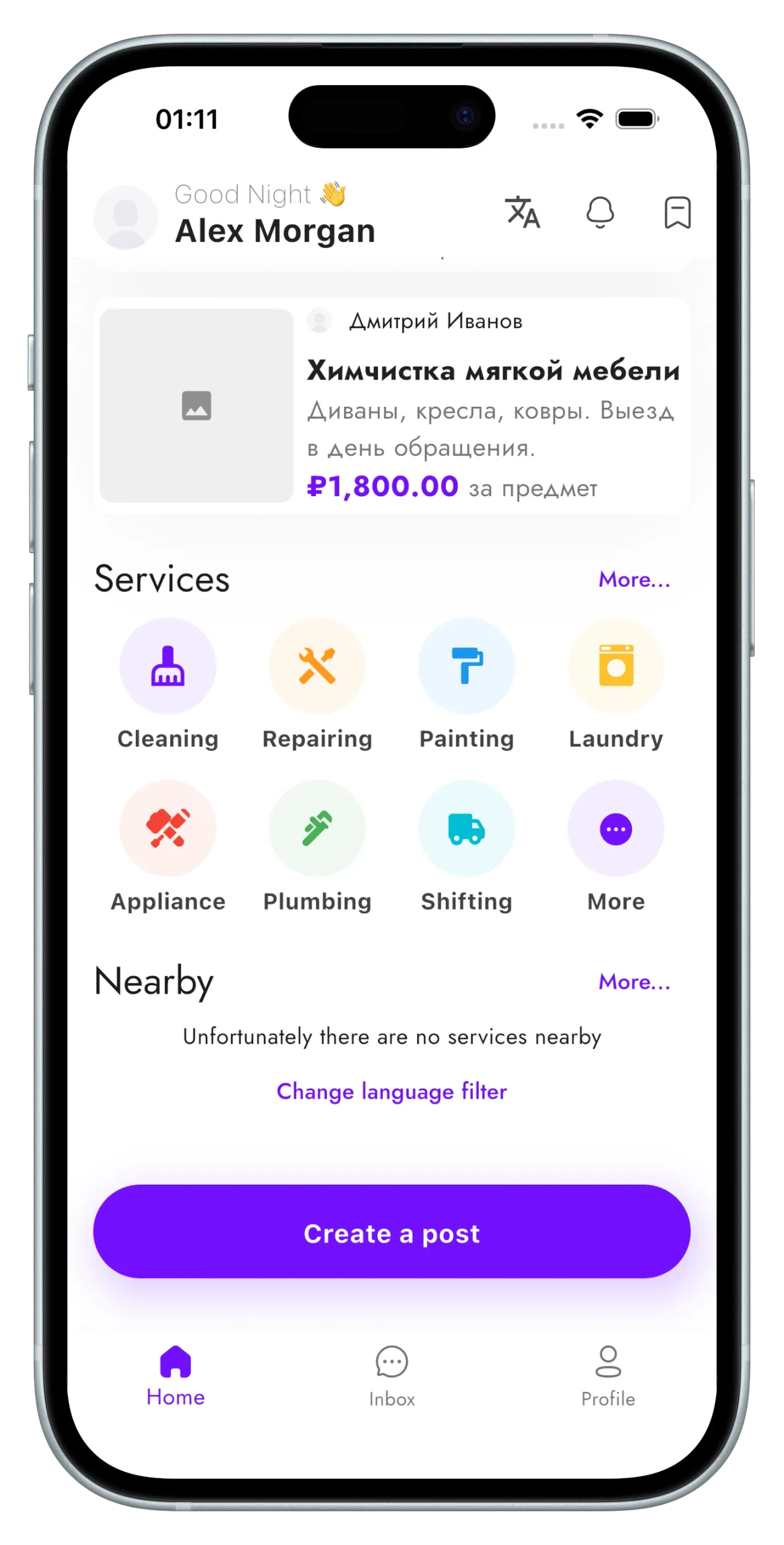
Service categories
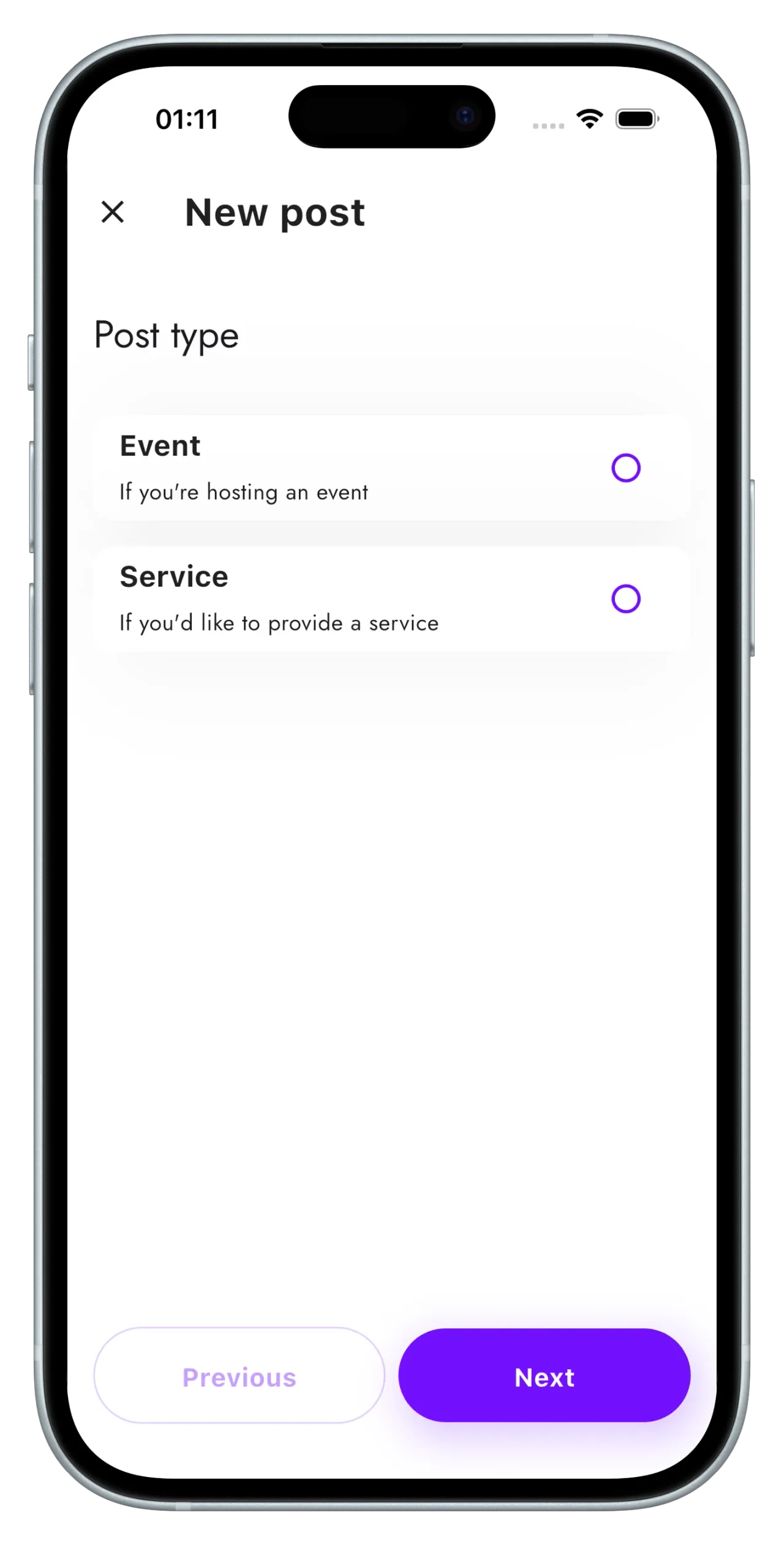
Post creation wizard — post type
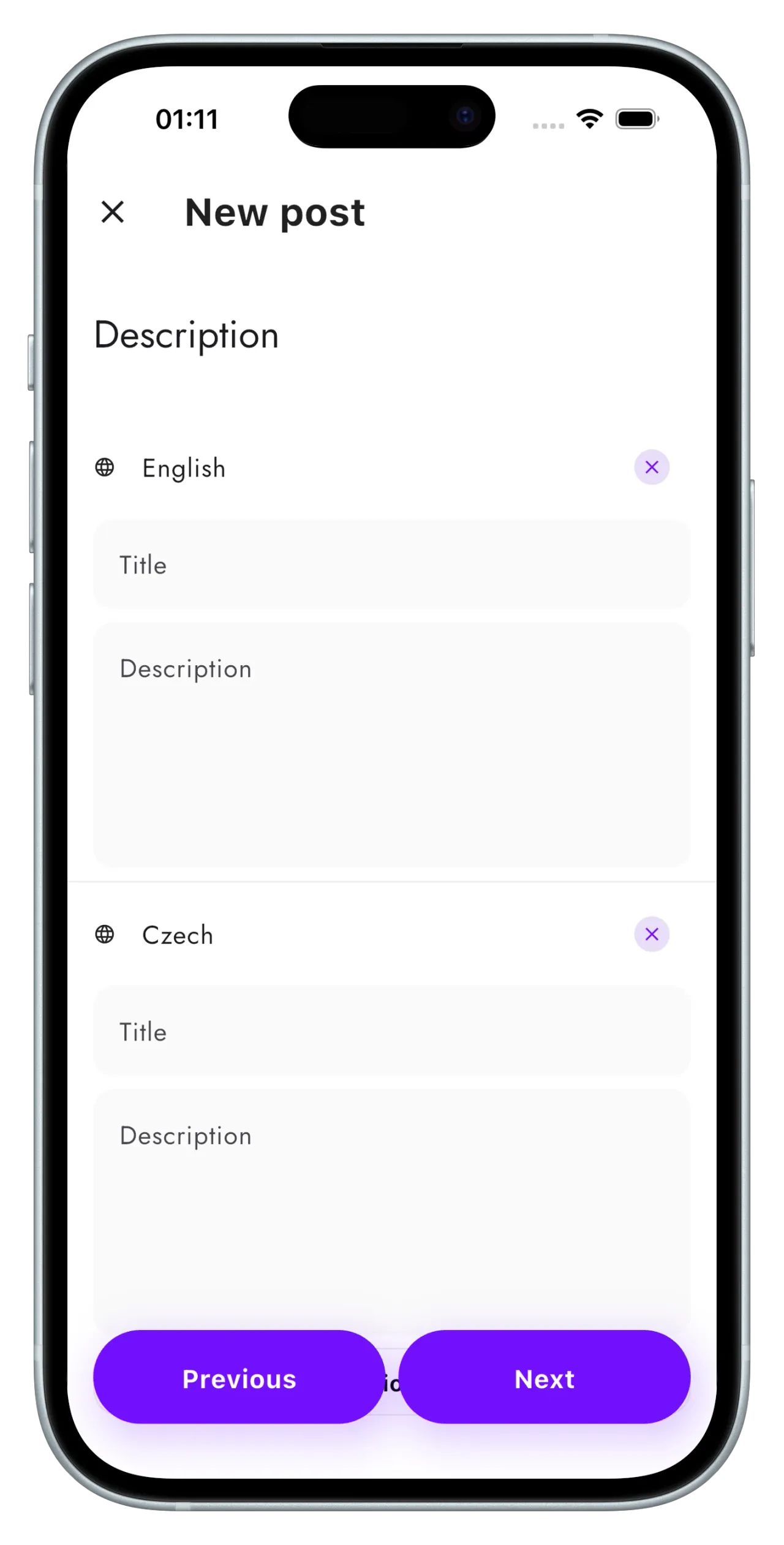
Post creation wizard — localized description
Skipping the Backend Team
A two-sided marketplace normally implies a backend team before it implies anything else: accounts, sessions, a database for listings and profiles, file storage for photos, and a server to put it all behind — before a single "Sign up" button can do anything real. Building and running that is usually where a small team's time and budget go before the product itself gets any attention.
OneTwoDo shipped without writing that layer at all. Firebase stood in for the entire backend — Authentication for accounts and password resets, Cloud Firestore for listings and profiles, Cloud Storage (Object storage) for photos, Analytics and Crashlytics for the operational visibility a team would normally build dashboards for. None of it needed provisioning, patching, or an on-call rotation, which is what let our team carry product design, the Flutter client, and the "backend" at once, in seven weeks.
What That Bought
The saving wasn't just the initial build — it showed up every time a feature needed backend support. Multi-currency pricing across fiat and crypto, localized descriptions per listing, a feed filtered by language and location: each of these is normally a backend ticket first, a client ticket second. Here they were client-side work against a data layer that already existed, so the wizard for posting a listing — type, description, location, pricing, category, photos — could go from idea to shipped screen in the time a backend spec alone would have taken elsewhere, showing up directly in Time to market.
It also lowered the product's Total cost of ownership. A launch that goes better than expected does not mean a scramble to scale a database or add a caching layer — Firebase absorbs that by default, at a cost that tracks usage instead of a fixed server bill paid whether the app has ten users or ten thousand.
Offline Demo Mode
App store review and casual demos both need a way to explore the product without a live backend or a real account. OneTwoDo ships a self-contained, in-memory data layer that swaps in for Firebase and serves seeded listings, profiles, and a working feed — the entire app is explorable end to end without touching the network, and without a reviewer or a prospect ever needing credentials.
Results
With Firebase standing in for the backend team the product would otherwise have needed, our team shipped a working cross-platform marketplace — email/password authentication with password reset, avatar upload with on-device image compression, full English/Russian localization, and an FAQ section — from an empty repository to a complete, store-ready app in seven weeks.
The scoreboard for the engagement:
- Seven weeks from empty repository to store-ready app, including product design, not just code.
- Zero custom backend services built, provisioned, or put on call — Firebase carried accounts, data, photos, and analytics.
- One team carried all three roles — design, Flutter client, and the managed backend — where a marketplace normally staffs each separately.
- Two locales and multi-currency pricing (fiat and crypto) shipped inside the same seven weeks, as client-side work against a data layer that already existed.
FAQ
OneTwoDo is what our MVP development service looks like in practice — a first release scoped to answer one question and shipped to both stores — and it is the anchor build behind our marketplace app development page, which tells the same story from the two-sided angle.